
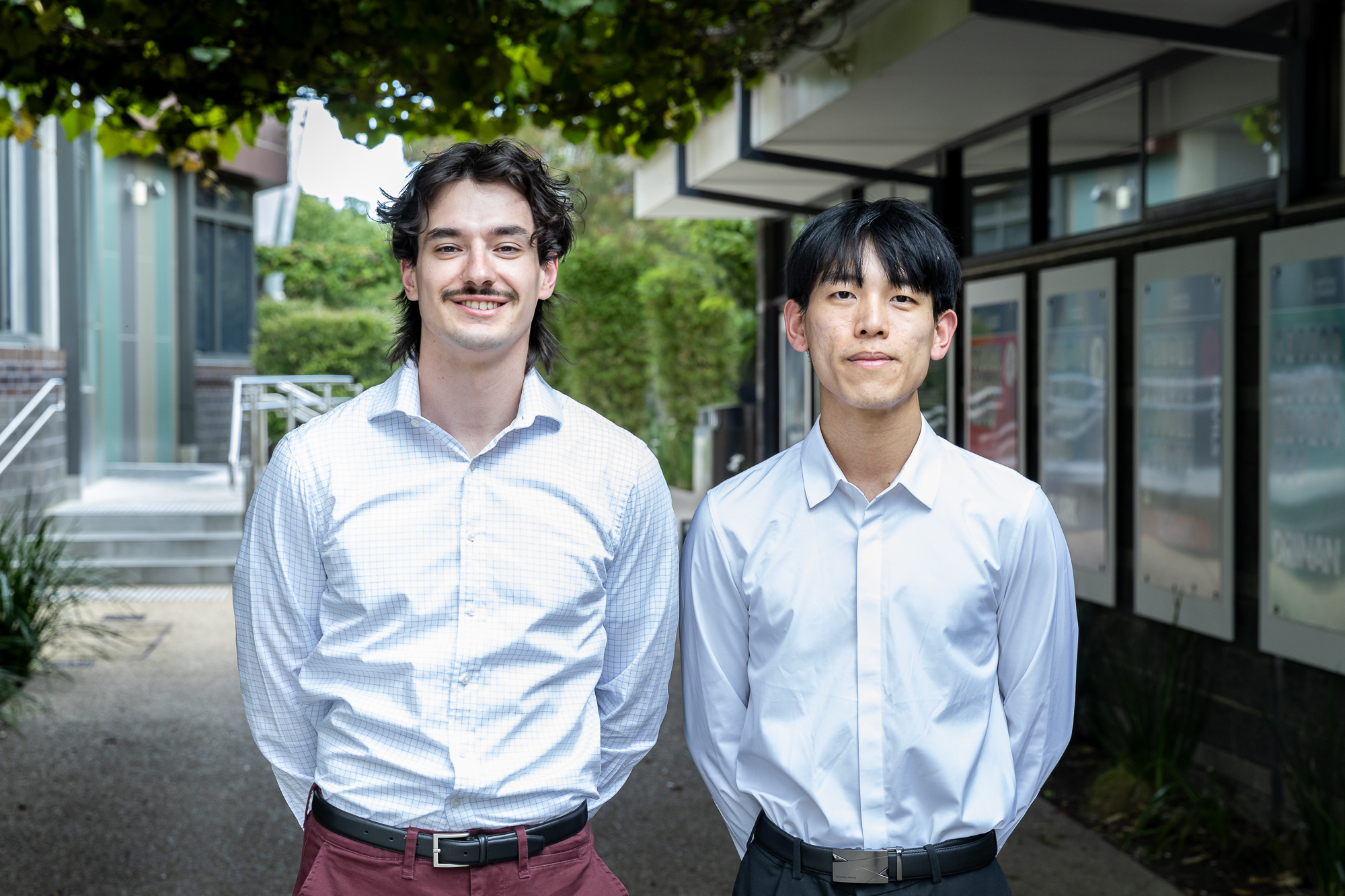
Mentonian Foundation Award 2025 Winners
Congratulations to Conor Murray (Class of 2018) and Songyi (Eric) Li (Class of 2017) for being selected as the recipients of the Mentonian Foundation Award 2025.
They each received a $15,000 grant towards their PhD studies, presented by Foundation Chair, Geoff Ryan AM (Class of 1956), at Mentone Grammar’s Awards Celebration Evening on Thursday 4 December 2025.
Here is a snapshot of our outstanding awardees and their individual PhD projects:
Conor Murray (Class of 2018)
Assessing the Potential for Deep Closed-Loop Geothermal Systems to Provide Heat for Green Alumina.
Australia has committed to achieving net zero carbon emissions by 2050, with much of the focus on reducing emissions from electricity generation. However, more than 20% of Australia’s end-use energy is consumed as heat for industrial processes, primarily sourced from fossil fuels. While alternatives such as electrification and green hydrogen are being explored, neither currently offers a viable zero-emissions solution for industrial heat.
Conor’s research investigates the potential of emerging Deep Closed-Loop Geothermal Systems (DCLGS) to supply low to medium temperature process heat (below 250˚C) for Australian industry. DCLGS are underground networks of closed pipes through which fluid circulates, absorbing thermal energy from deep geological formations. These systems involve inlet bores branching into multiple horizontal extensions to maximize heat transfer before reconverging and returning to the surface. The designs under study extend several kilometres vertically and horizontally, creating significant surface area for heat exchange. Currently, only one such system is under construction globally, and none have been deployed for industrial heat generation.
Conor is particularly focused on the Bayer Process used in alumina manufacturing at five major refineries across Australia. This process accounts for roughly two-thirds of each refinery’s energy demand, which is currently met entirely by natural gas and coal. These facilities rank among the largest consumers of industrial process heat in the country, making them critical targets for sustainable heat solutions. Preliminary estimates indicate that optimized DCLGS designs could theoretically deliver the approximately 600 MWth required by a sample refinery in Western Australia. The primary challenge lies in determining whether this technology can compete economically with fossil fuels.
To address this, Conor is collecting operational data from participating alumina refineries to design bespoke, optimized DCLGS systems tailored to their heat and power requirements. Additionally, he is developing a computational program to generate DCLGS designs, predict output temperatures, and model thermal impacts on surrounding rock over a 30-year lifespan. Future stages will include geological data analysis, probabilistic modeling of geophysical parameters, site-specific DCLGS design, economic modeling, retrofit planning for refinery systems, and comprehensive econo- environmental assessments including comparisons to fossil fuel baselines.
Conor, also a recipient, shared this reflection:
“I am extremely honoured to receive the 2025 Foundation Award. This grant will enable me to attend conferences around the world to learn from other researchers in my field, and to present my own work. I’m truly grateful to Mentone Grammar for their continued support, even after finishing my time there.”
Songyi (Eric) Li (Class of 2017)
Investigating Microbial-Derived T Cell Antigens Presented by MR1
Songyi (Eric) is conducting research to understand how microbial metabolites interact with the immune system through MR1-mediated antigen presentation. Group A streptococci (GAS; Streptococcus pyogenes) is a pathogen that poses a significant global health burden, causing over 500,000 deaths annually. While acute pharyngitis (strep throat) is the most common manifestation, Streptococcus pyogenes can also lead to severe illnesses such as scarlet fever, cellulitis, necrotizing fasciitis (flesh-eating disease), toxic shock syndrome, and post-infectious complications including glomerulonephritis, acute rheumatic fever, and rheumatic heart disease.
Despite its clinical significance, there is currently no vaccine available for Streptococcus pyogenes. This highlights the urgent need for new prevention and treatment strategies. Developing an effective vaccine requires a deep understanding of the immune response during infection, which remains incomplete. Evidence suggests that protective antibodies are generated by B cells following infection, supporting the feasibility of an antibody-based vaccine. However, the vast diversity of Streptococcus pyogenes serotypes allows the bacterium to evade antibody recognition, making alternative vaccine strategies essential.
Songyi’s research focuses on T cells, which play a central role in immunity by coordinating immune responses and directly killing infected cells. To function, T cells must recognize specific molecules presented on host cell surfaces by antigen-presenting molecules. One such molecule is MR1, which presents metabolites produced through metabolic processes. MR1 is highly conserved in humans, making it a promising target for universal and off-the-shelf therapeutics.
Recent studies have shown that Streptococcus pyogenes produces a unique metabolite that can be presented by MR1. The ability of this metabolite to stimulate T cells has been confirmed, but its identity remains unknown. Songyi aims to uncover the molecular nature of this metabolite and its interaction with the immune system to inform vaccine development. To achieve this, Songyi will use advanced approaches in immunology, microbiology, and chemistry. The project will employ mass spectrometry to analyse the metabolite’s components and nuclear magnetic resonance (NMR) spectroscopy to determine its chemical structure. Finally, Songyi will assess its immunological effects by administering it to human cells and mice and evaluating the resulting immune response.
By characterizing this MR1-presented, T cell–activating metabolite, Songyi’s research seeks to advance understanding of how S. pyogenes is recognized by the immune system. This work could lead to novel diagnostics or vaccine targets that leverage MR1-restricted T cell responses to combat Streptococcus pyogenes and potentially other pathogens.
Songyi says, “I am profoundly honoured to receive this scholarship, which is truly transformative. It not only provides essential financial support but also affirms my potential to succeed, enabling me to fully dedicate myself to my studies in biology.”
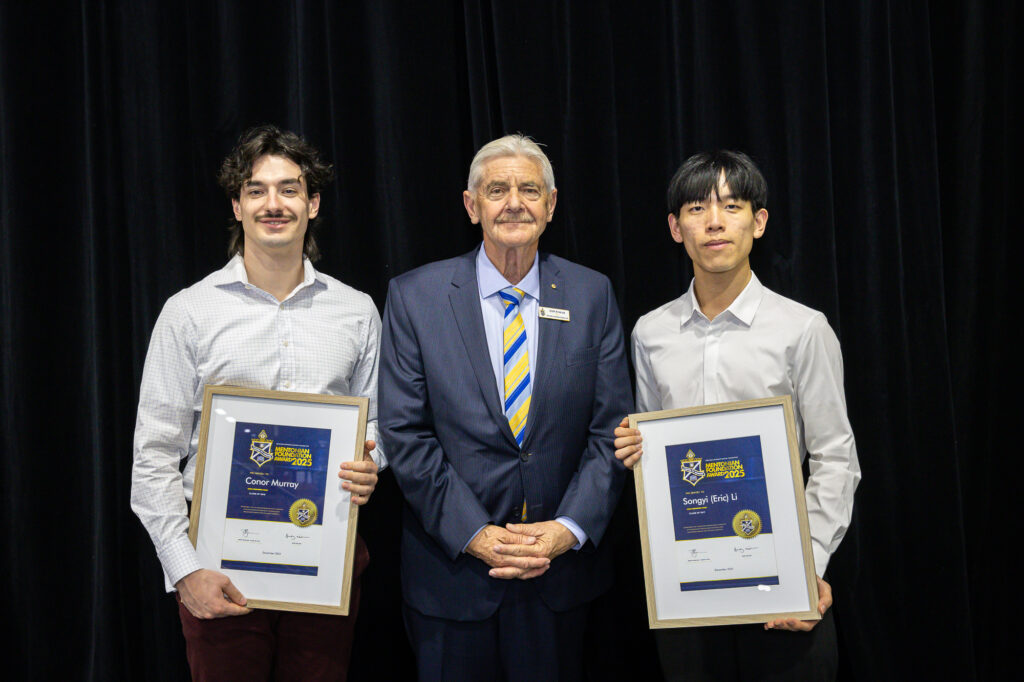
Pictured L-R: Conor Murray (Class of 2018), Geoff Ryan AM (Foundation Chair & Class of 1956), and Songyi (Eric) Li (Class of 2017).
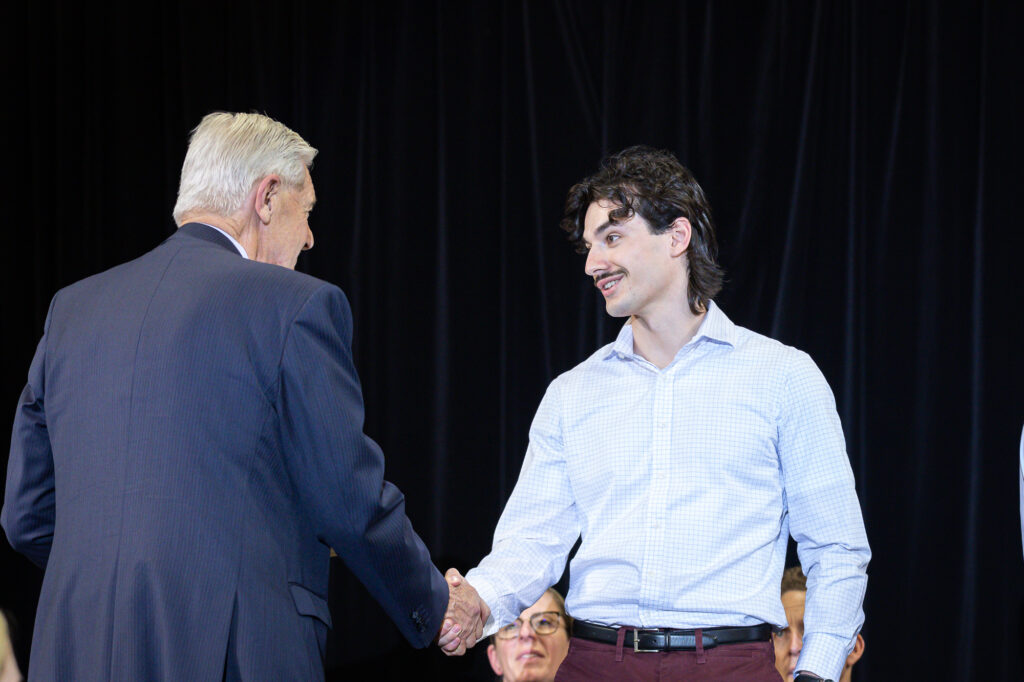
Geoff Ryan AM (Foundation Chair & Class of 1956) presenting Conor Murray (Class of 2018) with his award at the Academics Celebration Evening 2025.
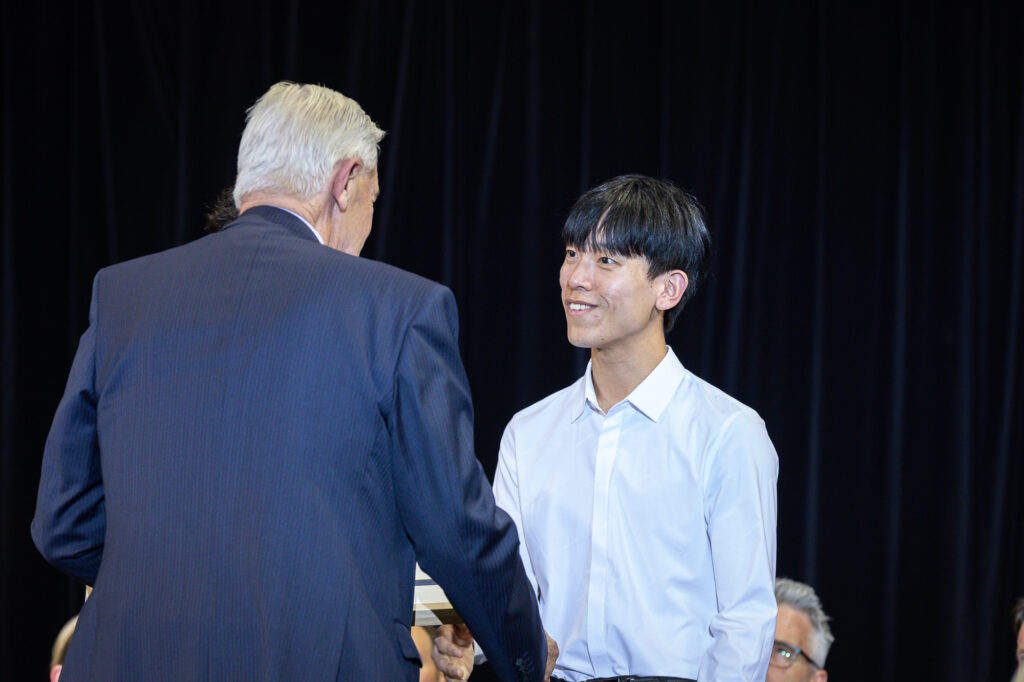
Geoff Ryan AM (Foundation Chair & Class of 1956) presenting Songyi (Eric) Li (Class of 2017) with his award at the Academics Celebration Evening 2025.